Raqq
A focused study app for the tālib al-ʿilm (student of knowledge), bringing reading, note-taking, and review into one place.
Intro
Raqq is a study workspace for people who want to build a lasting body of knowledge. It started with a simple problem: as your studies grow, it becomes harder to keep books, source texts, people, concepts, notes, and earlier reflections connected.
Writing another note is easy. Keeping track of its context is harder. You need to know what you read, where an idea came from, what it relates to, why it mattered, and when to review it.
Raqq is still in development. The goal is to build a workspace that connects notes to their sources and brings important material back for review at the right time.
My role
I am designing and building Raqq as a desktop app, covering product direction, interface design, and development with Tauri, React, Rust, and SQLite. Right now, I am focused on building the foundation for local reading and note-taking. Source integration and spaced repetition are planned for launch, but they are not finished yet.
Solution
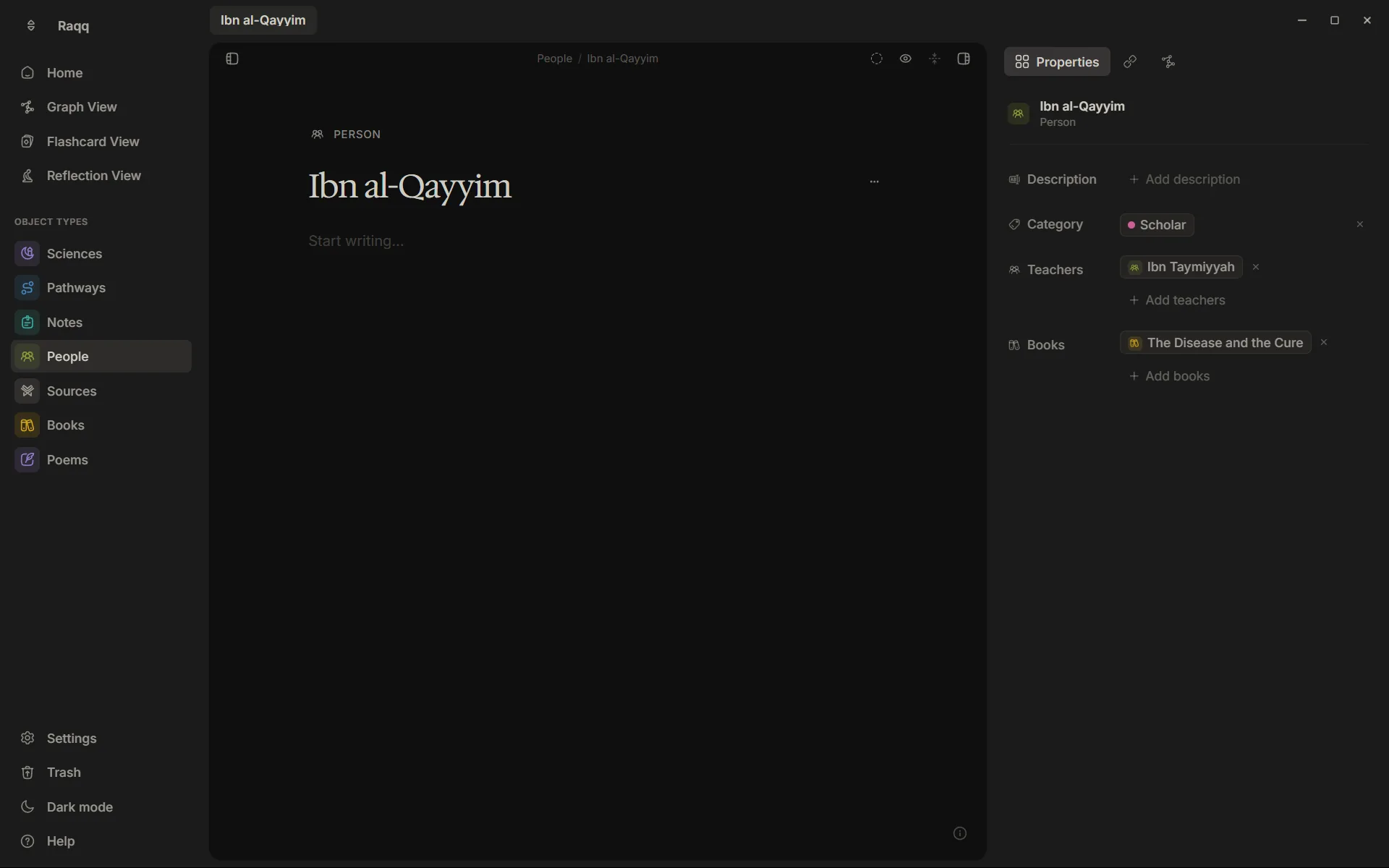
Raqq organises study material as different types of content that can be linked together. Notes, books, pathways, people, poems, reflections, and sources each have their own structure, while links connect related material.
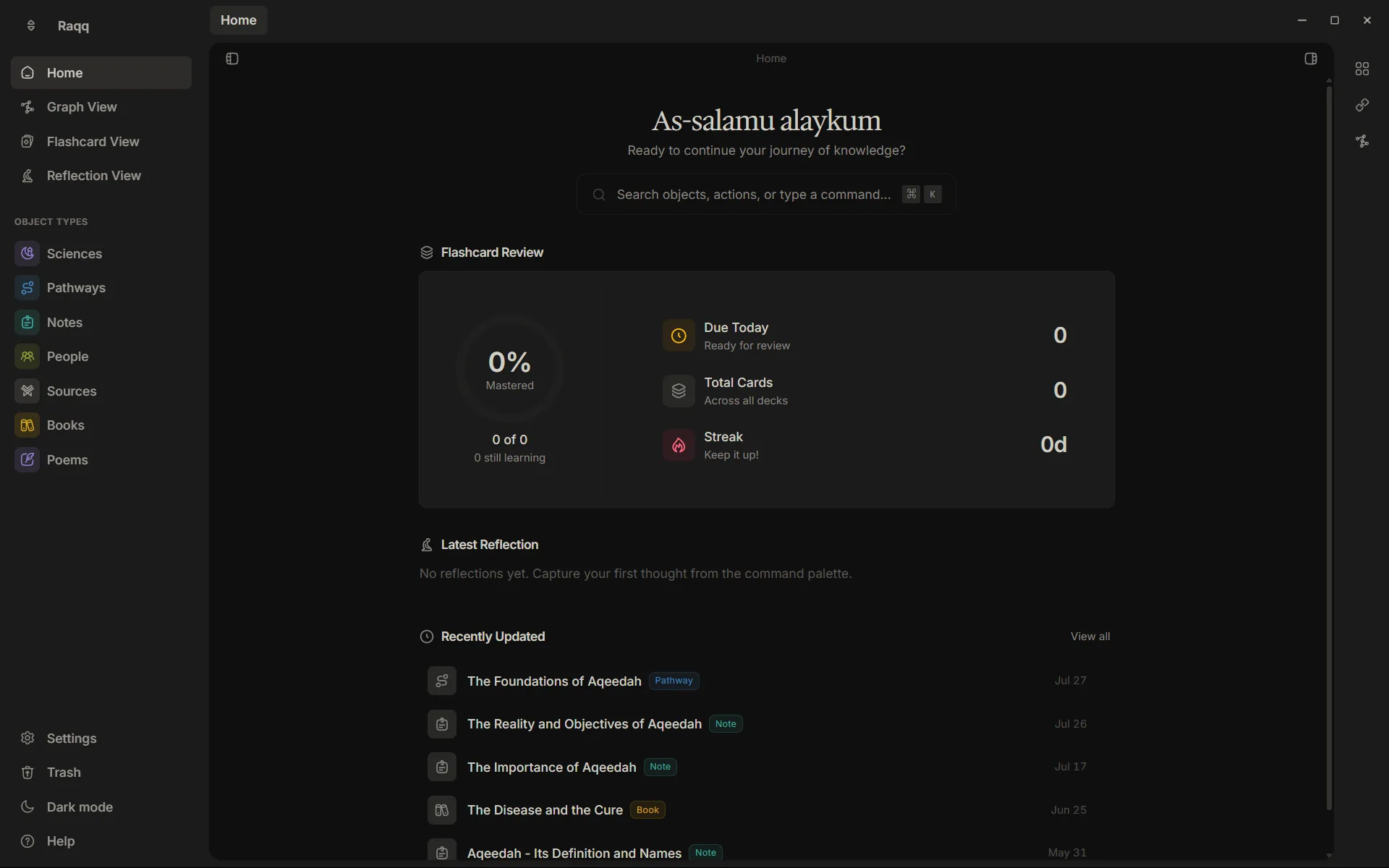
The note editor gives you a focused place to write and read. Notes are stored as Markdown files on your computer, so your content is not locked inside an account or proprietary cloud database.
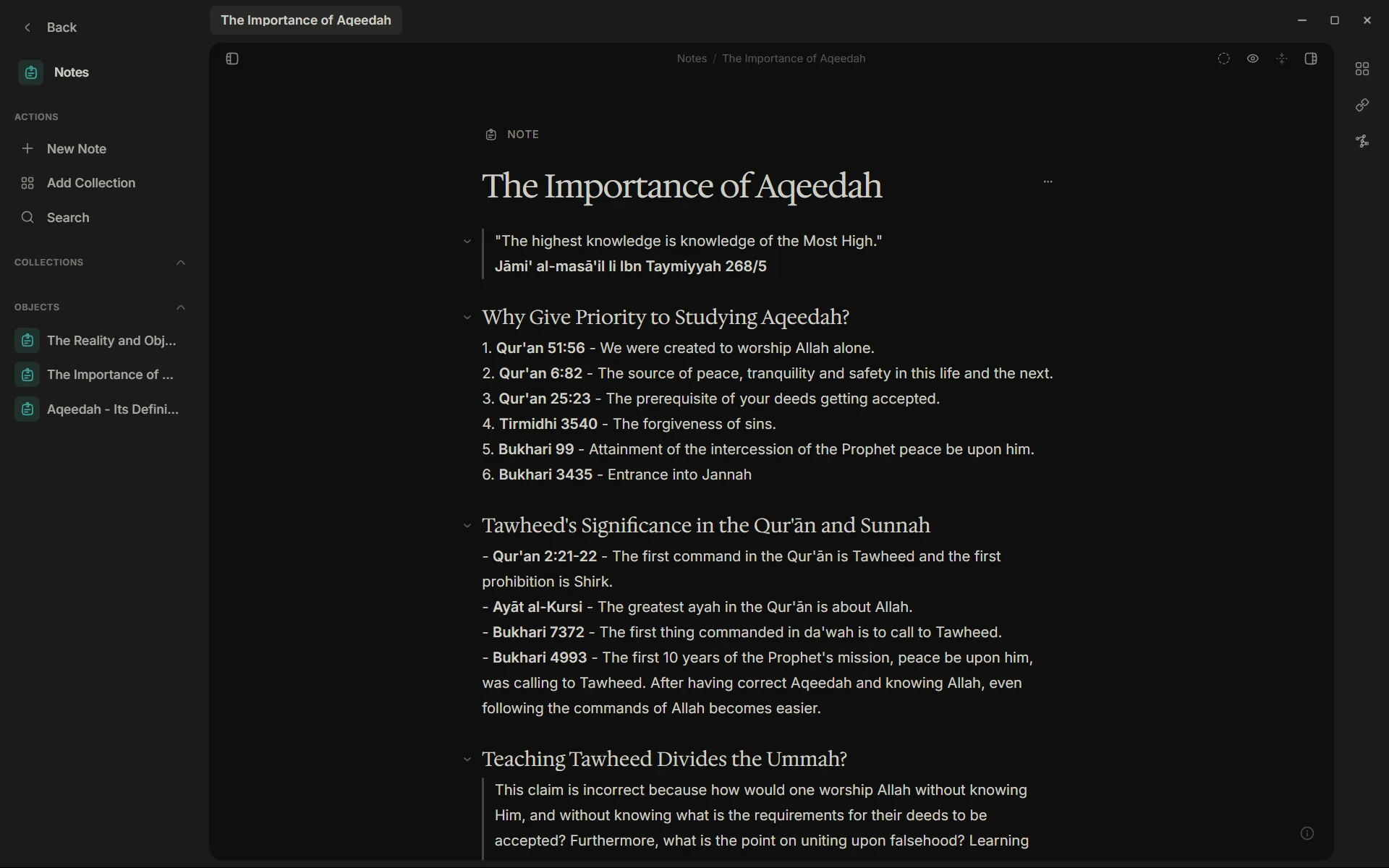
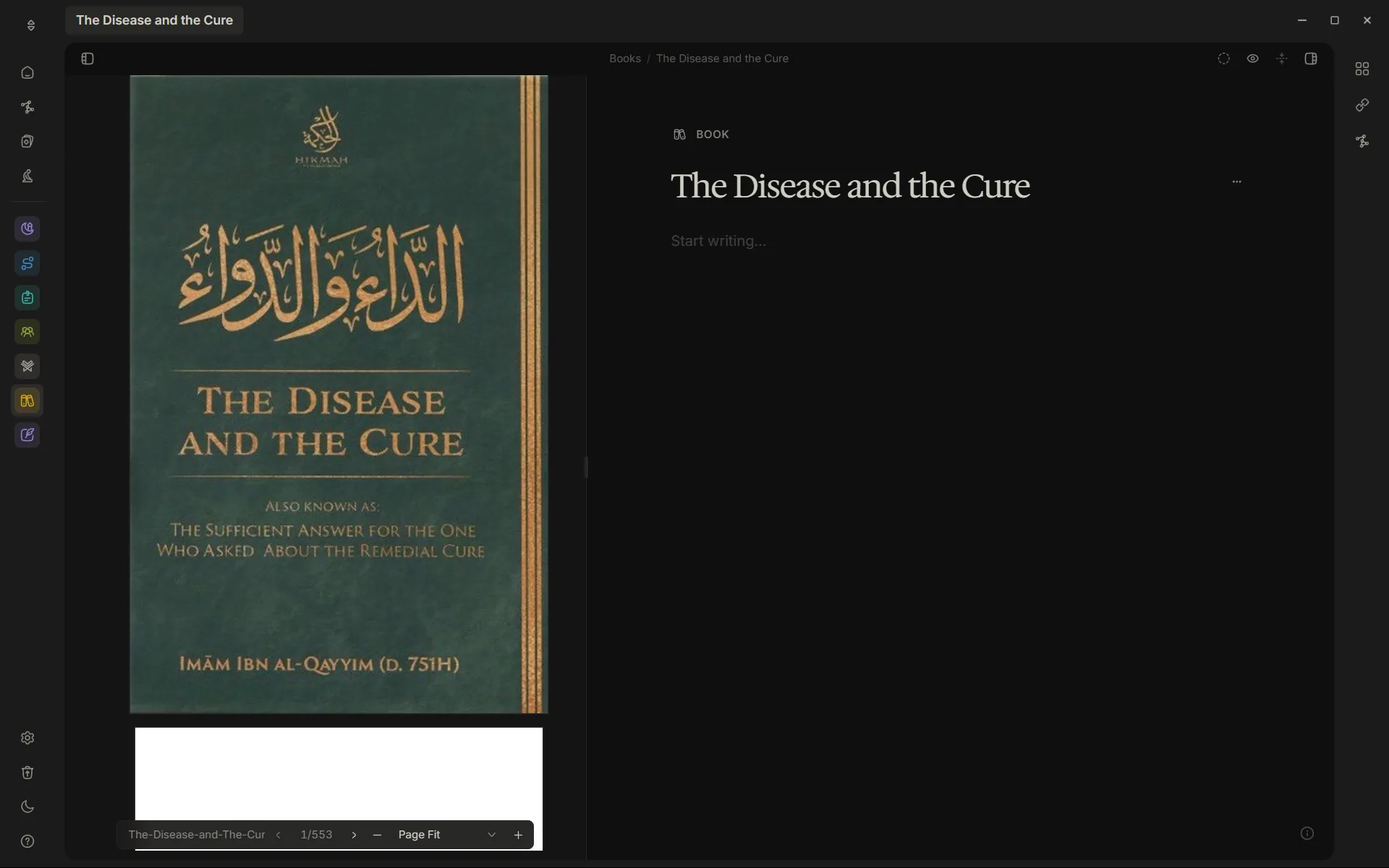
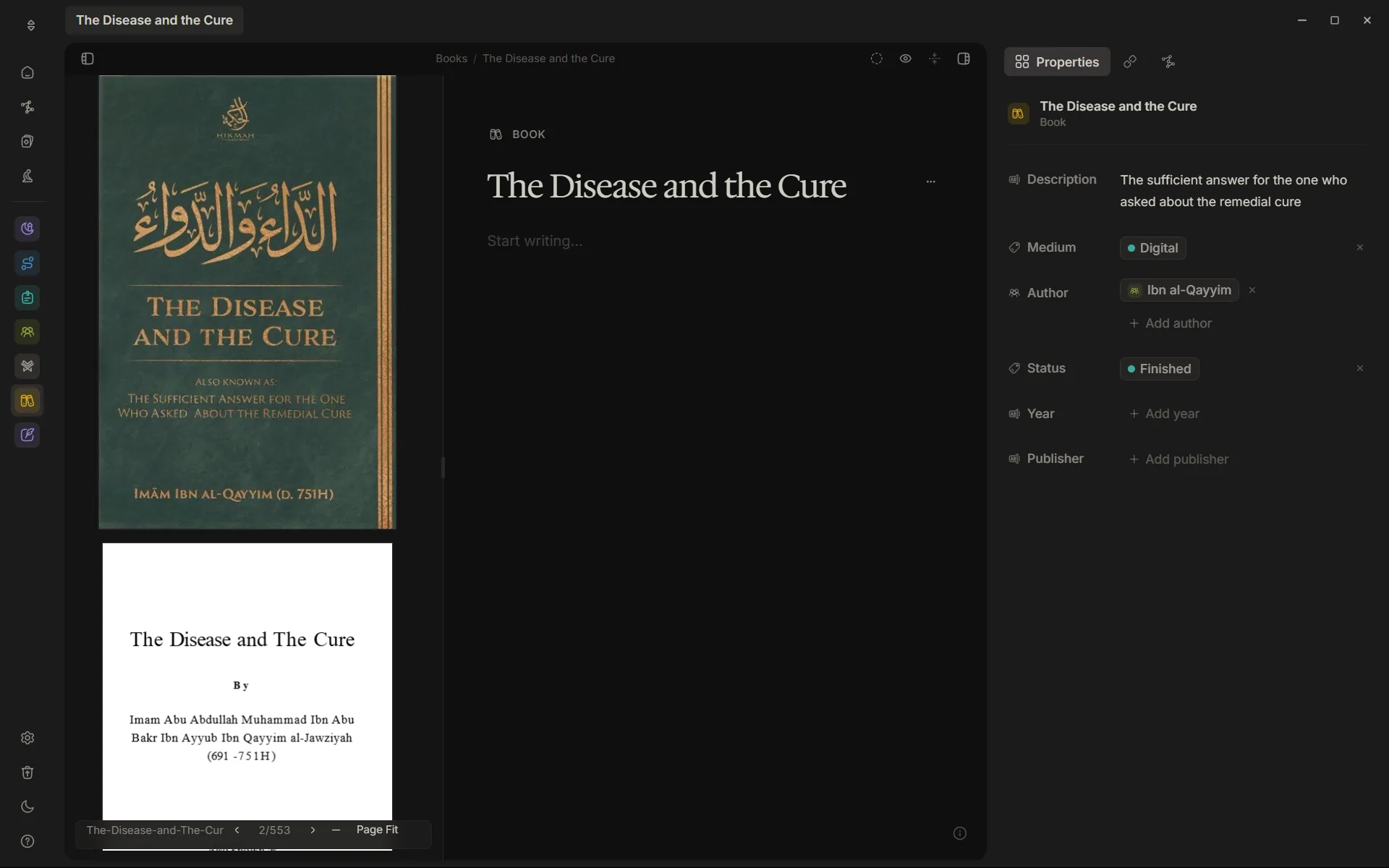
Books are part of the same workspace. The book view keeps source material close to related notes and other details.
Process
I began by identifying what long-term study requires that general note-taking apps often miss. A study workspace needs to show where information came from, how ideas connect, and when to revisit them. Saving information is only the first step.
These needs led me to build Raqq around local files on the desktop. Notes are stored as Markdown files on disk. SQLite stores the details Raqq needs for fast search, properties, and links, while Rust manages the storage layer. The app does not require accounts, cloud syncing, or telemetry.
I am building Raqq in stages. The current focus is making reading, writing, and local storage reliable. Source integration and spaced repetition will come later, once the foundation is ready.
Lessons
Keeping files local affects more than storage. Because notes remain readable Markdown files on disk, it also shapes how Raqq handles search, links, details, and future features.
Study tools need different kinds of material to stay distinct. A person, book, reflection, and source may all contain text, but treating them as the same type of document loses useful context.
The order of features matters too. Spaced repetition is tempting to build first because it is easy to see and demonstrate. It will be more useful once notes, sources, and links are stable.